
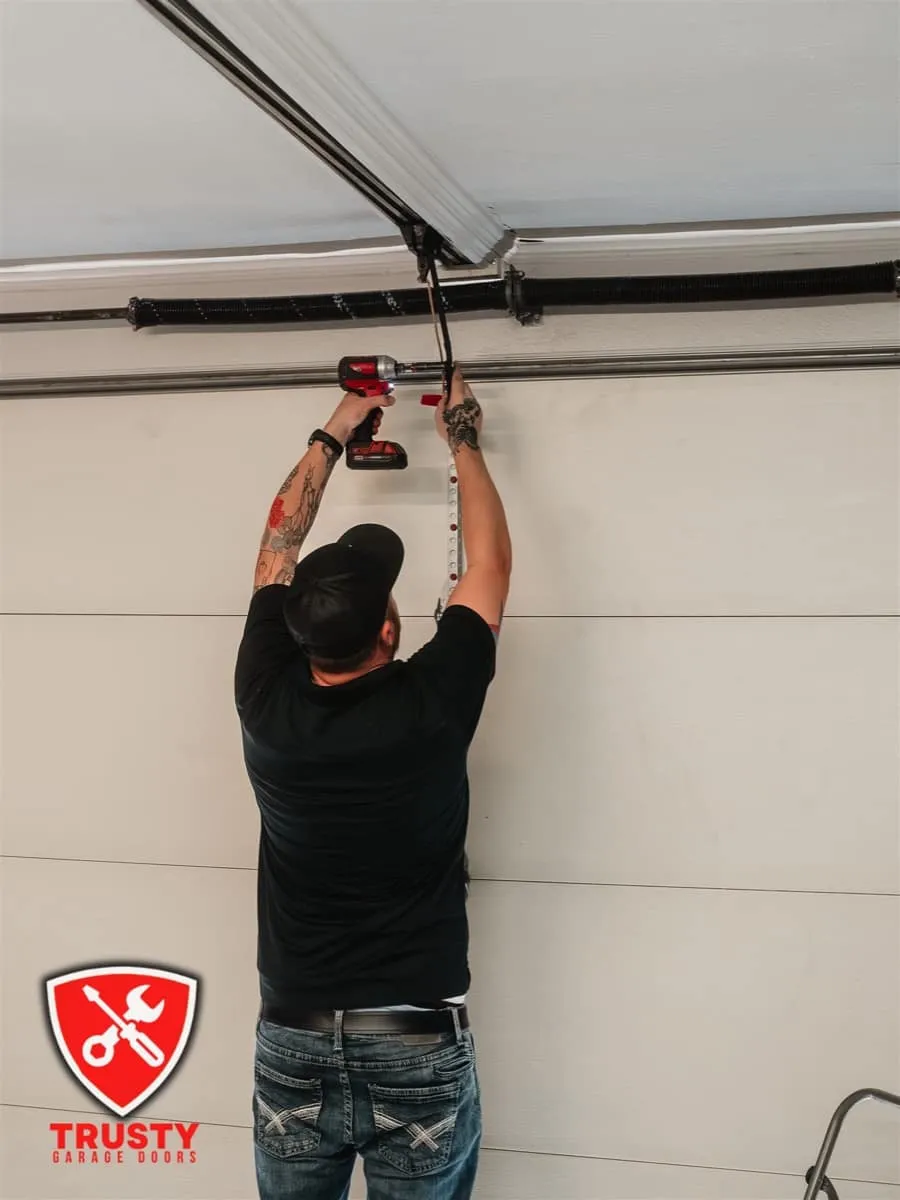
Garage Door Openers
Your opener gets pushed more times in a week than your front door does in a month, and almost nobody gives it a thought until the morning it won't budge and there's a kid late for school in the back seat. So before that happens, here's a straight guide we put together for our DFW neighbors. Maybe you're buying your first smart opener. Maybe you've got a 15-year-old unit grinding away up there and you're tired of the noise. Or maybe a blinking light has you wondering what's wrong. Either way, no sales pitch from us. Just the stuff we'd tell you if we were standing in your garage.
How a Garage Door Opener Actually Works (and What It Doesn't Do)
Most folks have this backwards, so let's clear it up first. Your opener doesn't lift the door. Your springs do. That motor up on the ceiling is really just a guide and a holder. It nudges the door along the track and keeps it put. All the actual weight, and a double door can run 150 pounds or more, gets carried by the torsion or extension springs counterbalancing it.
Why should you care? Because if your door fights you when you lift it by hand, a shiny new opener won't fix a thing. Bolting a strong motor onto worn-out springs is the fastest way we know to cook that motor early. So the door has to be balanced and the springs healthy before you spend a nickel on an opener. If it feels heavy, or you've ever heard a sharp bang from the garage out of nowhere, that's a busted spring, and that's the conversation we have first.
Once the door's sorted, the opener itself boils down to four calls: the drive type that moves it, the horsepower behind it, the smart stuff (Wi-Fi, app, maybe a camera), and battery backup so it still runs when the lights go out. Nail those four and you're looking at a quiet, dependable opener for a good 12 to 15 years.
- Springs lift the door — the opener guides and holds it
- A new opener can't fix a heavy, unbalanced door
- Four decisions: drive type, horsepower, smart features, battery backup
- A quality opener lasts 12–15 years with light seasonal maintenance
The Four Drive Types: Chain, Belt, Screw & Wall-Mount
Drive type is the first real fork in the road. It decides how loud your garage gets, how much fussing you'll do down the line, and how it copes with Texas heat.
Chain Drive. A metal chain hauls the trolley along, same idea as the chain on a ten-speed. It's the cheapest to buy and it's built like a tank, with plenty of grunt for a heavy insulated or solid-wood door. The trade-off is noise. That chain rattle travels right through the house. Stick it on a detached garage, a shop, or anywhere there's no bedroom sitting on top.
Belt Drive. Same setup, but a reinforced rubber belt replaces the chain. Quiet, smooth, hardly any vibration, and it wears slower too. Costs a little more than a chain, and it's worth every dollar. This is what we put in most DFW homes, especially all those two-story houses around Plano and Frisco with a bedroom or a game room parked right over the garage.
Screw Drive. A threaded steel rod spins and walks the trolley down it. Simple, strong, quick, not many moving parts. Catch is, it hates temperature swings more than the others. The lube can stiffen in a freeze and run thin when it's blazing, and the attic over your garage hitting 120 in August is no friend to it. The newer self-lubricating ones are better, but we'd still want it in an insulated garage before we'd recommend it here.
Wall-Mount (Jackshaft). This one bolts to the wall next to the door and drives the torsion bar straight, so nothing hangs from the ceiling. That clears the whole ceiling for a car lift, overhead storage racks, or a high-lift door, and it's about as quiet as they come. It's the priciest option, and it only works on a properly balanced torsion-spring door. If your garage ceiling is precious real estate, this is the one.
- Chain drive: cheapest and toughest, but loud — best for detached garages
- Belt drive: quiet and smooth — our top pick for homes with rooms over the garage
- Screw drive: simple and strong, but temperature-sensitive in Texas heat
- Wall-mount/jackshaft: premium, ceiling-clearing, ultra-quiet — needs a torsion-spring door
Smart Wi-Fi Openers: myQ, App Control & What's Worth It
Pretty much every new opener from LiftMaster, Chamberlain, and Genie ships with Wi-Fi baked in now, and we'll say it plainly: this is one of the few "smart home" gadgets that actually pays you back day to day.
With a smart opener you can pop the door open or shut from your phone whether you're in the driveway or in Galveston. It'll ping you if you drove off and left it up. You can set it to close itself after, say, ten minutes. And you can hand a delivery driver or the dog walker temporary access without cutting them a spare remote you'll never see again. LiftMaster and Chamberlain run on the myQ app, which is far and away the most common one we see in DFW. Genie uses its own app, Aladdin Connect. Both show you the open/close history and the door's current status at a glance.
Now, a couple of honest notes. Some of the myQ partner tie-ins have come and gone over the years (the in-garage Amazon delivery thing, for one), and a feature here or there has sat behind a subscription from time to time. So buy the opener for the core control and the alerts, which don't cost anything, and treat the rest as gravy. And if your house already runs on Google Home, Alexa, or Apple Home, double-check what plays nice with what before you assume it all clicks together.
Want eyes on the garage too? A few of the higher-end LiftMaster units have a wide-angle camera built right in, so you can see and even talk to whoever's down there from the app. Handy if you've got teenagers or a workbench full of tools.
- Open, close, and check status from your phone anywhere
- Auto-close alerts so you never leave it open again
- Grant temporary access to guests and deliveries — no extra remotes
- LiftMaster/Chamberlain use myQ; Genie uses Aladdin Connect
- Buy for the free core control; treat subscription extras as a bonus
Battery Backup: A Must-Have for Texas Storms & Outages
Anybody who sat through a North Texas spring storm season knows the grid likes to blink. And after February 2021, well, none of us need a reminder. When the power dies on a regular opener, your garage door turns into a heavy manual door, and we've pulled plenty of folks out of a jam where the car was stuck inside (or stuck out in the weather) right when they had somewhere to be.
A battery backup opener keeps right on working through an outage. Figure roughly 20 cycles, or up to about 24 hours, depending on the model. So you're never boxed in or locked out. LiftMaster's backup units even flash a little status light and chirp when they flip over to battery, which is a nice heads-up that you're running on reserve.
One thing on the legal side, since you might've read something different online. Battery backup is mandated by state law in California (SB-969), not Texas. A handful of older articles claim it's required here. It isn't. Down here it's strictly an optional upgrade. That said, given how often our storms knock out power, it's an upgrade we genuinely push for every DFW home, and especially if the garage is how you and the kids actually come and go. And if your opener already has backup, swap that battery about every two to three years so it's got juice when you finally need it.
- Keeps the door working during a power outage — around 20 cycles / up to 24 hours
- No more getting stranded with the car trapped during a storm
- Required by law in California (SB-969) — NOT in Texas, despite some articles
- Strongly recommended here given DFW storms and grid outages
- Replace the backup battery every 2–3 years
Opener grinding, dead, or 15 years old? We’ll fix or replace it — usually same day.
Top Opener Brands: LiftMaster, Chamberlain & Genie
We put in and service every major brand out there: LiftMaster, Chamberlain, Genie, Wayne Dalton, Amarr, Clopay, DoorLink, Marantec, Overhead Door, all of them. Nobody's paying us to steer you one way, so here's our honest read on the big three openers.
LiftMaster is the pro's pick and what we hang the most. Built tough, solid app support through myQ, the deepest bench of belt, chain, and wall-mount models, and the best lineup if you want battery backup or a built-in camera. When somebody tells us they want to buy it once and forget about it, this is usually where we point them.
Chamberlain comes from the same parent company as LiftMaster and runs the same myQ app. Think of it as the retail-shelf sibling. Very capable, a touch easier on the wallet, and a genuinely good value for a standard belt-drive setup at home.
Genie has been around a long while, runs its own Aladdin Connect platform, and gives you good value across chain, belt, and screw-drive models. Dependable. If you already own a stack of Genie remotes and want to stay in that family, no reason to switch.
Honestly though, the badge matters less than people think. A top-shelf opener bolted to a poorly balanced door, or one with the sensors knocked out of whack, is going to drive you nuts no matter whose name's on the cover. The install is where it's won or lost.
- LiftMaster: our most-installed, best for durability, battery backup, and cameras
- Chamberlain: same parent company, shares myQ, great budget value
- Genie: dependable, own Aladdin Connect app, good across all drive types
- We service all brands — including Wayne Dalton, Marantec, and Overhead Door
- A proper install matters more than the brand on the box
Repair or Replace? How to Tell
Not every opener gripe means buying a whole new unit, and we'll shoot you straight on which way to lean. A ton of problems are quick, cheap fixes: a stripped gear, a fried logic board, dead remote batteries, safety sensors that drifted out of line, a chain or belt that went slack. Those are repairs. Done in one visit.
But openers do get old, and there's a point where throwing more money at one is just delaying the funeral.
If yours is past the 12-to-15-year mark, replacement parts start getting hard to track down, and a repair often just buys you a few more months. If it's got no safety sensors at all (anything built before 1993), it's both unsafe and not to code, so that one's a replace, full stop. If it's grinding, lurching, or rattling because the internal gears are chewed up, the repair bill can creep right up toward what a quiet new belt-drive would run you anyway. And if you're after smart features or battery backup, those don't really bolt onto an old motor. They come with a new opener.
Our rough rule: if the repair's going to cost you more than half the price of a new opener, or the thing's already pushing past 12 years, replacing it is usually the smarter spend. Not sure where yours falls? Punch your job into our instant price calculator for a ballpark in about two minutes, or have a tech come diagnose it in person. No pressure, no bait-and-switch.
- Repair: bad gear, logic board, sensors, remotes, or a loose chain/belt
- Replace if it's 12–15+ years old and parts are hard to find
- Replace any opener made before 1993 (no safety sensors = not to code)
- Replace if you want smart control or battery backup
- Rule of thumb: repair costing over half a new unit means replace
What a Professional Opener Install Includes
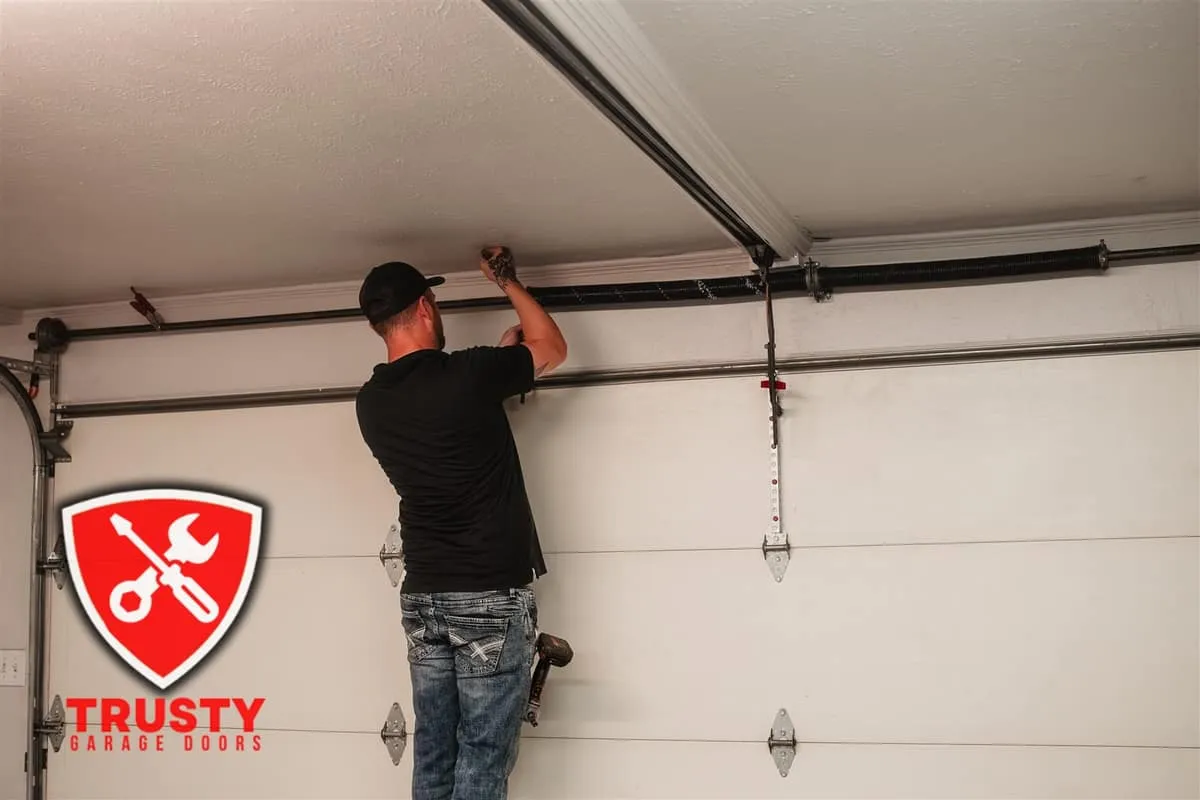
A new opener ought to be a turnkey deal. When our tech pulls out of your driveway, the thing works, your phone's already paired to it, and your old unit is loaded in our truck and gone. Here's what we actually do on a Trusty install.
First thing, we check the door's balance and the springs, because dropping a new opener onto an unbalanced door is just throwing money in the trash. Then we pull the old opener and haul it off, mount the new motor and rail, and wire it in. We set the safety sensors down at the base on both sides and get them aligned, dial in the travel limits and force settings so the door stops and reverses exactly where it should, and program your remotes, keypad, and wall button.
If it's a smart unit, we get it on your Wi-Fi and into the app (myQ or Aladdin Connect) and walk you through it before we leave, not after a phone call the next day. We test the auto-reverse safety with the door, confirm the battery backup is charging if it's got one, and grease the rail and rollers so it runs whisper-quiet from the jump. Then we sweep up after ourselves. Parts and labor are warranty-backed, and your $49 service call gets waived when you book the install.
- Door balance and spring check before anything else
- Old opener removed and hauled away
- Safety sensors installed, aligned, and tested
- Travel limits, force settings, remotes, and keypad programmed
- Wi-Fi/app setup, battery-backup check, and auto-reverse safety test
- Warranty-backed parts and labor — $49 service call waived with the install
Safety Sensors: The Most Important Part You Never Think About
Since 1993, federal law has required every opener to carry photo-eye safety sensors. They're those two little boxes mounted about six inches off the floor, one on each side of the door. They shoot an invisible beam across the opening, and if anything trips that beam while the door's coming down (a kid chasing a ball, the dog, a bike left in the way) the door stops cold and rolls back up. It's the single most important safety piece on the whole setup, and most people forget it exists.
Funny thing is, those same sensors are the number-one reason a door refuses to close. If yours drops halfway and then reverses, or the opener light is sitting there blinking at you, it's almost always the sensors. They got bumped out of line, the lenses are dusty, a cobweb's strung across the beam, or the late-afternoon sun is glaring straight into the eye and overpowering it. A lot of the time a careful re-aim and a wipe with a soft rag is all it takes.
There's a second safety system worth knowing about too: auto-reverse force detection. If the bottom of the door bumps something on the way down, it's supposed to reverse the second it makes contact. Both of these are worth testing now and then. Lay a flat 2x4 on the floor in the door's path. A healthy door reverses the instant it touches that board. If yours grinds down onto it instead, stop using the door and call us. That is not a thing to leave broken with little ones or pets in the house.
- Photo-eye sensors have been federally required since 1993
- Misaligned or dirty sensors are the #1 reason a door won't close
- A gentle re-aim and lens wipe fixes most sensor issues
- Auto-reverse force detection should reverse the door on contact
- Test with a flat 2x4 — if it doesn't reverse, stop using the door and call us
Get the Right Opener the First Time — Trusty Garage Door Repair
Maybe you need a quiet belt-drive for the bedroom sitting over your garage. Maybe it's a smart opener with battery backup before the next round of storms rolls through. Or maybe you just want somebody honest to look at your old one and tell you whether to fix it or replace it. Whatever it is, we're here to help you land on the right call, not the one that empties your wallet fastest.
We're Plano locals covering all of Dallas-Fort Worth, with in-house, background-checked techs, same-day and 24/7 emergency service, and upfront pricing with no surprises at the door. New openers come with warranty-backed parts and labor, and we book fast through HouseCall Pro.
What's on the table right now: $60 off full repair jobs, your $49 service call waived with any repair or install, 5% off for military, teachers, firefighters, and AARP members, and financing on new doors. Ask about our Trusty Care membership too, which gets you priority service and 15% off.
Want a ballpark? Our instant price calculator gets you one in about two minutes. Or just call a real local tech right now at (214) 624-6348. No pressure, no bait-and-switch. We'll help you pick the right opener and get it hung correctly the first time.
- Local Plano techs serving all of DFW — same-day & 24/7 emergency
- Honest repair-vs-replace advice and upfront pricing
- $60 off repairs, $49 service call waived, 5% off military/teachers/firefighters/AARP
- Financing on new doors and Trusty Care membership perks
- Use the instant price calculator or call (214) 624-6348
Opener FAQs
How much does a new garage door opener cost in DFW?+
It really comes down to the drive type and the features you want. A basic chain-drive install lands well under a premium smart belt-drive or a wall-mount with battery backup. And remember the opener is only half the story. A real install covers the sensors, the programming, and hauling off your old unit. Quickest way to get an honest number is our instant price calculator, and your $49 service call gets waived when you book a repair or install.
Which garage door opener is quietest?+
A wall-mount (jackshaft) is the quietest of the bunch, because it bolts to the wall and skips the overhead rail entirely. A belt drive is right behind it and the better value for most homes, way quieter than any chain drive. Got a bedroom or game room over the garage? Go belt or wall-mount and you'll thank yourself.
Is battery backup required for garage door openers in Texas?+
Nope. It's required by law in California under SB-969, but not in Texas, no matter what some article online told you. Down here it's an optional upgrade. We still push hard for it because of our storm season and how often the grid blinks. It keeps your door working when the power's out, so you're never the one stuck in the driveway with the car trapped inside.
Can I add Wi-Fi or smart control to my old opener?+
Sometimes, with a retrofit kit like a myQ add-on, as long as your opener has the right safety sensors and a compatible hookup. But on the older units it's usually not worth the trouble, and the good stuff like battery backup and a built-in camera only comes with a new opener anyway. We'll tell you straight whether a retrofit makes sense for you or you're better off just upgrading.
Why does my garage door open but not close?+
Nine times out of ten, it's the safety sensors. If the door starts down and then reverses, or the opener light is blinking at you, the photo-eyes are probably knocked out of line, dirty, or blocked. Even afternoon sun glare can set them off. A careful re-aim and a wipe of the lenses usually does it. If that doesn't bring it back, give us a call.
How long does a garage door opener last?+
Figure 12 to 15 years out of a good one with a little seasonal upkeep. Once you're past that, replacement parts get scarce and the repairs tend to just kick the can down the road. And anything built before 1993 is missing the required safety sensors, so that one's a replace no matter how well it still seems to run.
Do you install openers I buy myself?+
We're glad to talk through your options either way. That said, we lean toward the units we install because we back them with warranty-covered parts and labor, and we know they're right for your door and our Texas climate. A solid install on the right opener beats a name brand on the box every time. Call us at (214) 624-6348 and we'll help you sort it out.