
Garage Door Making Noise? What Each Sound Means
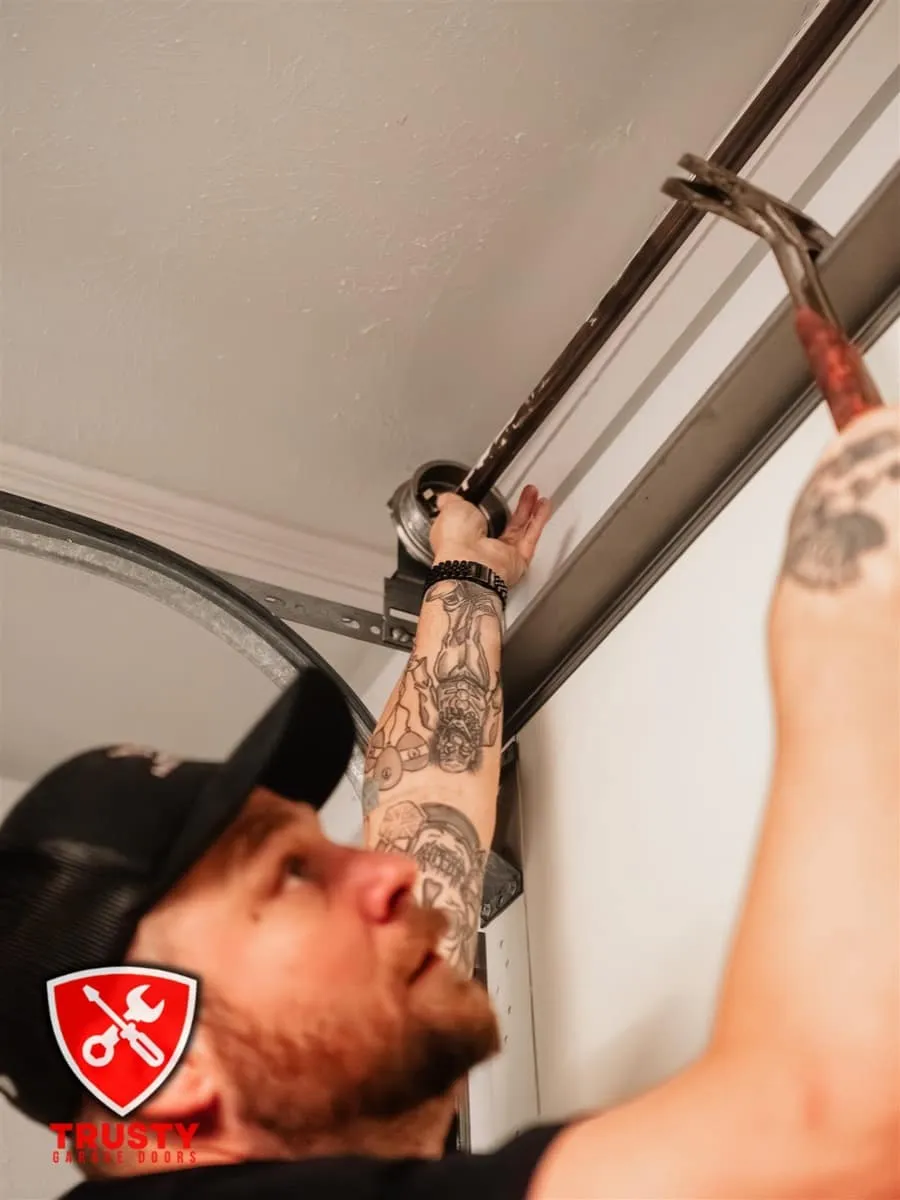
Your garage door is the biggest moving thing in your house. It’s a few hundred pounds of steel rolling up and down a track several times a day, so a little noise is normal. But a new noise — or one that’s getting louder — is your door telling you something’s wrong. After years of service calls across Plano, Frisco, McKinney, and the rest of DFW, I can usually tell what’s going on before I even pull into the driveway, just from how the homeowner describes the sound.
Here’s a plain-English guide to what each noise actually means, what you can safely handle yourself, and what needs a tech.
First, a quick safety note
Two parts of your garage door are under serious tension and are not DIY territory: the springs (the long coils above the door or on either side) and the cables. If the noise is coming from those, leave them alone. A torsion spring stores enough energy to break a hand or worse. Everything else on this list — rollers, hinges, the opener — is fair game for basic homeowner maintenance.
Grinding or scraping
A harsh metal-on-metal grind usually points to one of three things:
- Worn rollers. The little wheels that ride in the track wear out, especially the cheap steel ones builders install in new DFW construction. When the bearings go, you get grinding.
- Bent or misaligned track. If the door is rubbing the track, it’ll scrape and chatter on the way up.
- A dry or failing opener. Chain-drive openers grind when the chain or trolley needs attention.
If you catch a grind early, swapping to nylon rollers and lubricating the system often fixes it. If the door is also catching, shuddering, or sitting crooked, you may be looking at an alignment or off-track issue — don’t force it open or closed.
Squealing or squeaking
This is the most common call we get, and the good news is it’s usually the cheapest to fix. Squealing almost always means dry hinges, rollers, and bearings. Texas heat bakes the old lubricant right out, and our spring-to-summer humidity swings don’t help.
Grab a can of garage-door-specific lubricant (a silicone or lithium spray — not WD-40, which is a degreaser and actually makes it worse long-term). Hit the hinges, the roller stems, and the springs. Nine times out of ten the squeal disappears. If it comes right back within a week or two, a roller bearing is probably shot.
Popping or banging
A loud bang is the one that scares people, and it should get your attention. The most common cause is a broken torsion spring. When a spring snaps — and in DFW they typically let go after years of heat cycling and 10,000-plus open/close cycles — it makes a sound like a firecracker or a gunshot in the garage. You might find the door suddenly feels impossibly heavy, won’t open, or only rises a few inches.
If you heard a single sharp bang and now the door is dead or lopsided, stop using it. Running the opener against a broken spring can damage the motor and bend the door. This is a same-day spring replacement — and you almost always want both springs done at once, since the second one is the same age as the one that just failed.
Popping while the door moves (not a single bang) is different — that’s often hinges flexing or rollers binding at the track’s curve. Less urgent, but worth a look.
Rattling and vibrating
A door that rattles like a tin can usually has loose hardware. The constant up-and-down vibration backs out nuts and bolts over time. Take a socket wrench and snug up (don’t over-tighten) the bolts on the hinges, brackets, and track. Also check the bolts where the opener rail mounts to the ceiling — a loose opener mount makes the whole assembly buzz.
If the rattle is coming from the opener motor itself, or you hear a humming with no movement, that points to a worn gear, a bad capacitor, or a logic-board issue. That’s a job for opener repair rather than a wrench.
Clicking, humming, or straining
- Rapid clicking from the opener with no movement: often the travel limits or a safety-sensor problem.
- Humming but not moving: the motor has power but something’s stuck — a stripped gear or, again, a spring problem.
- Straining, slow, jerky travel: the door is fighting friction or losing spring balance. Disconnect the opener (pull the red release cord) and lift the door by hand. A balanced door should glide and stay put around waist height. If it slams down or won’t stay up, the springs are out of adjustment.
What you can fix vs. what to call about
Do it yourself: lubricate moving parts, tighten loose hardware, clean the tracks, replace the opener’s batteries and check the photo-eye sensors are aligned.
Call a pro: any spring or cable noise, a door that’s off-track or crooked, opener motor or board issues, or anything that doesn’t quiet down after basic maintenance. When metal parts are wearing, waiting usually turns a small repair into a bigger one.
Not sure where your noise falls? You can compare against typical repair prices, ballpark your fix on our instant price calculator, or just describe the sound to us and we’ll tell you straight — no pressure, no upsell. We do honest, warranty-backed garage door repair all over the Metroplex, same-day, with 24/7 emergency service when a spring lets go at the worst possible time.
Hearing something you don’t like? Call or text Trusty Garage Door Repair at (214) 624-6348, or grab a free instant estimate online. We’ll get it diagnosed and quiet again.
Nick founded Trusty Garage Door Repair in Plano and has spent 10+ years fixing garage doors across Dallas–Fort Worth. He still takes calls, still runs jobs, and writes these guides the way he explains things in a customer's driveway — straight, no upsell. Read Nick's story →
One tap tells Google you trust our guides, so they show up more in your own search results and AI answers.