Should You Repair or Replace Your Garage Door?
It usually starts with a loud bang in the garage, a door that won’t go up, or a panel that’s been dented since the last hailstorm. Then comes the question every homeowner eventually asks: do I fix this thing, or is it time for a whole new door?
After more than a decade working on doors all over Dallas-Fort Worth, here’s the honest answer most people don’t get from the big national outfits: most garage door problems are a repair, not a replacement. A broken spring, a worn opener, a door off its track — those are fixable in an hour or two, and they cost a fraction of a new door. But there are real situations where replacing is the smarter money. Let me walk you through how I’d think about it if it were my own house.
Start With What Actually Failed
The single most useful question is: what part broke, and is the rest of the door still in good shape?
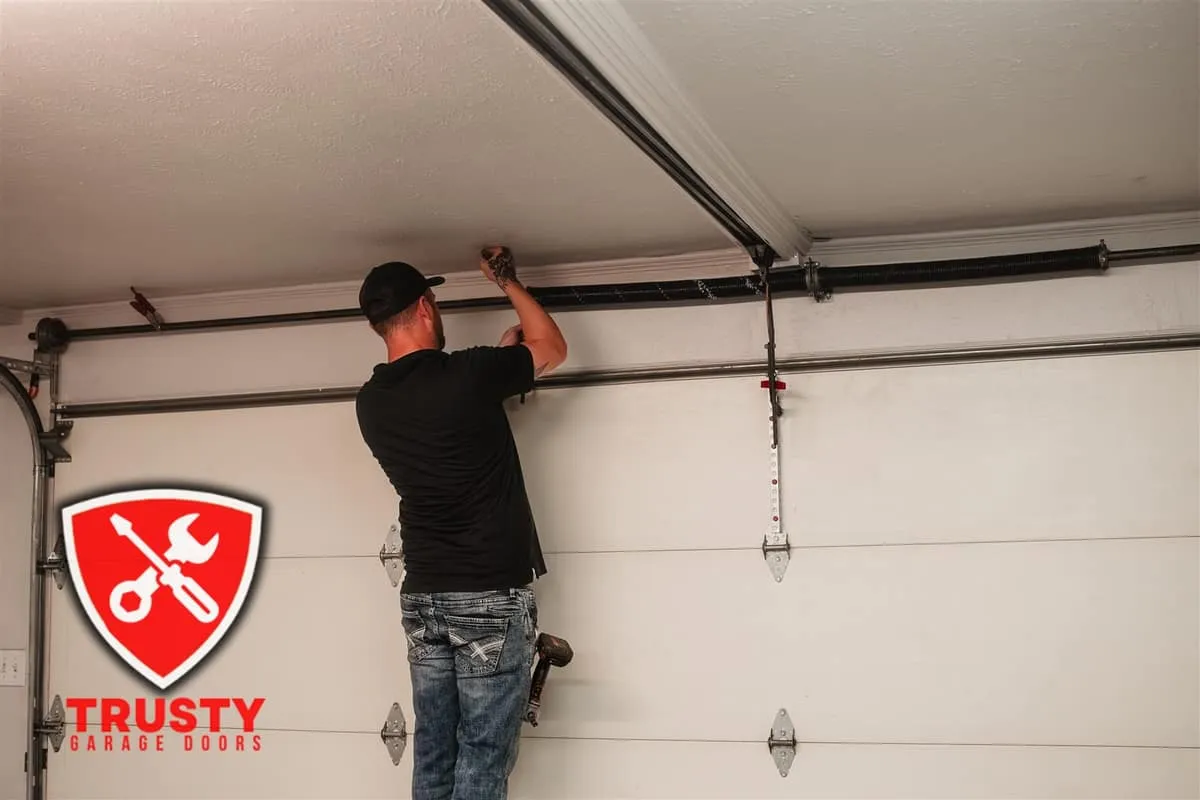
A garage door is a system — the door panels, the springs, the cables, the rollers, the tracks, and the opener. When one piece fails, the panels themselves are usually fine. That’s the key. The door slab is the expensive part. Everything else is a serviceable component.
These are almost always repairs, not replacements:
- A broken spring. This is the number one call we get, especially in summer. Texas heat cycles springs hard, and they’re rated for a set number of cycles — they just wear out. A spring replacement restores a door that otherwise has years left in it.
- A dead or noisy opener. Openers are bolt-on machines. If the door itself is solid, you fix or swap the opener, not the door.
- A door off the track. Backed into it? Roller jumped the rail? An off-track door looks catastrophic but is usually a straightforward fix.
- Frayed cables, worn rollers, loose hardware. Routine wear. Cheap to fix.
When Replacement Starts to Make Sense
Now the other side. I’ll tell a customer to replace when the door itself is the problem, or when the repairs are stacking up faster than they’re worth. Watch for these:
The panels are damaged or rotting
If you’ve got a steel door rusting along the bottom, a wood door rotting after years of DFW humidity and sun, or two-plus panels caved in from a car or hail, repair gets tricky. Single-panel replacements are possible, but matching a 12-year-old panel color and style is often impossible — and a patched-up door rarely looks or seals right.
The door is more than 15–20 years old and failing repeatedly
Doors don’t last forever. If yours is pushing two decades and you’re calling for a new repair every few months — spring, then cable, then a hinge, then a roller — you’re slowly paying for a new door in installments and still ending up with an old one. At some point the math flips.
You want better insulation or storm resistance
This is a real DFW consideration. An insulated door keeps your garage (and the rooms above it) noticeably cooler in July and helps with energy bills. Newer doors also handle wind and weather better. If your garage doubles as a workshop, gym, or office, an upgrade can genuinely pay you back.
Safety or structural issues
Cracked sections that affect how the door holds together, or a door so warped it won’t seal — those are safety calls. A garage door is the largest moving object in your home and it sits over cars and kids. I won’t band-aid something that isn’t safe.
A Simple Rule of Thumb
Here’s the gut-check I give people over the phone: if the repair costs less than about half the price of a new door, and the door has good years left, repair it. If you’re approaching that line and the door is old, damaged, or you’ve been throwing money at it repeatedly, replacement is usually the better long-term value.
Numbers move a lot depending on spring type, door size, single vs. double, insulation, and whether it’s a basic steel door or a custom carriage-house style. Rather than guess, you can plug your situation into our instant price calculator and get a real ballpark in a minute — no phone call required.
Don’t Forget the Stuff That’s Easy to Miss
A few things people overlook when weighing the decision:
- Curb appeal and resale. A new door is one of the highest-return upgrades in real estate. If you’re selling soon, a fresh door photographs well and signals a maintained home.
- A good repair buys you years. Quality parts, proper adjustment, and routine maintenance on a sound door can add a decade of life. Replacing a door because of one broken spring is like buying a new car because of a flat tire.
- Get an honest set of eyes on it. A lot of “you need a whole new door” pitches are really just an upsell. A straight-shooting tech will tell you when a $200-ish repair solves your problem — and when it genuinely doesn’t.
The Bottom Line
Most of the time, a garage door repair is the right, cost-effective call. A full garage door replacement earns its keep when the door is old and repeatedly failing, physically damaged or rotting, unsafe, or when you’re ready to upgrade insulation and looks. Match the fix to what actually broke, weigh it against the age and condition of the whole door, and you’ll rarely go wrong.
Not sure which side of the line you’re on? We’ll give you a straight answer — no pressure and no bait-and-switch. Call (214) 624-6348 for same-day service anywhere in DFW, or get a quick instant estimate to see your numbers first.
Nick founded Trusty Garage Door Repair in Plano and has spent 10+ years fixing garage doors across Dallas–Fort Worth. He still takes calls, still runs jobs, and writes these guides the way he explains things in a customer's driveway — straight, no upsell. Read Nick's story →
One tap tells Google you trust our guides, so they show up more in your own search results and AI answers.