
Frozen Garage Door? How to Free It Without Damage
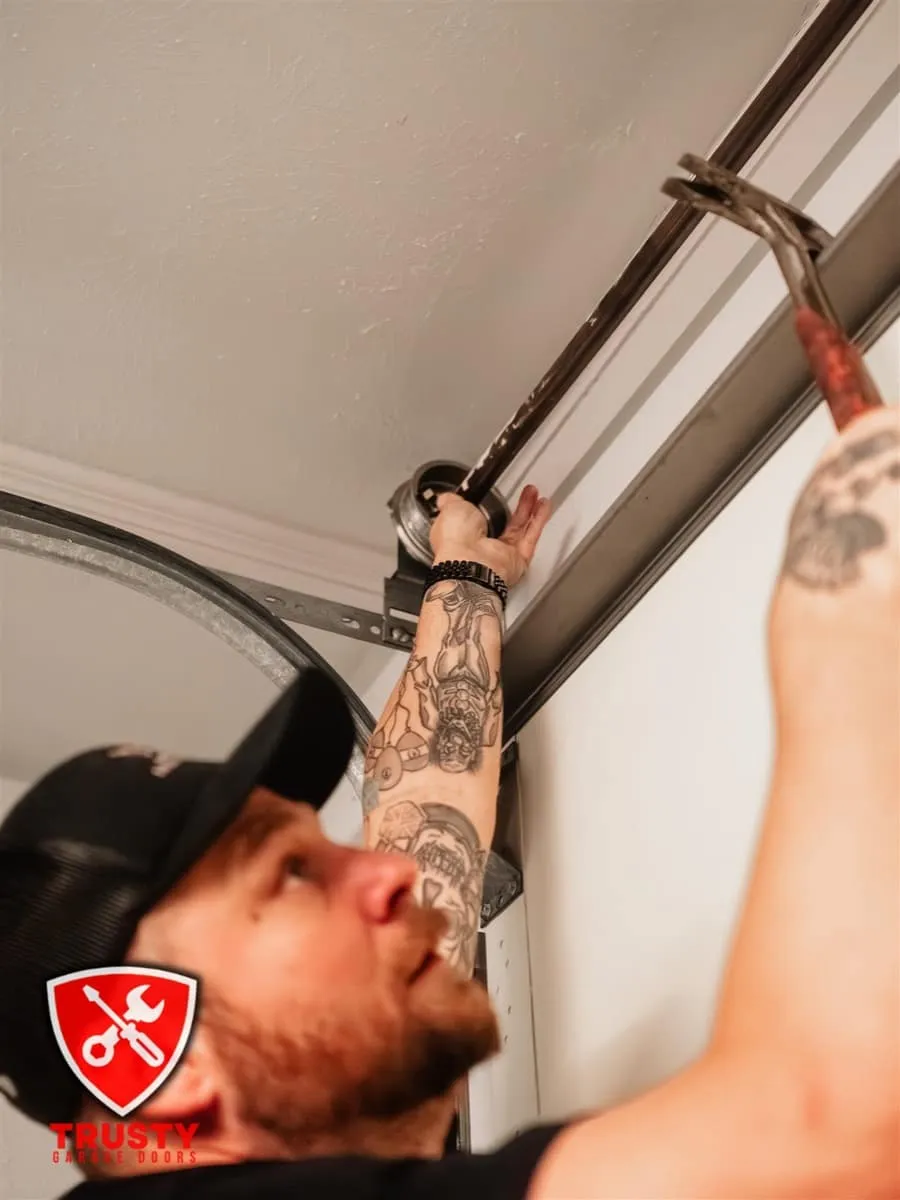
DFW winters are weird. Three days of 70-degree weather, then a hard freeze blows in overnight, and by morning your garage door is glued to the floor like someone caulked it shut. We get a wave of calls every time the temps drop into the teens — usually from people who’ve already hit the button twice and are standing there watching the opener strain against ice.
Don’t keep mashing that button. Here’s how to handle it without making things worse.
Why It Happens
The culprit is almost always the bottom seal — that rubber strip running the full width of the door at floor level. Its job is to press tight against the concrete and keep out drafts, pests, and weather. After a DFW ice storm (the freezing rain kind, which is worse than snow because it coats everything in a thin, invisible sheet), water seeps under the seal and freezes solid. Concrete is porous and holds moisture, so even a light overnight freeze can bond rubber to a garage floor with surprising grip.
We had a stretch a few years back where this was happening to half the houses in Frisco and McKinney every morning for four days straight. Neighbors texting each other “hair dryer trick works” at 7am.
Occasionally the tracks themselves will ice up if water has been pooling in the channel — less common, but it happens on the lower track section where runoff collects.
The Right Way to Free a Frozen Door
The key word is patience. It’s just ice, and ice melts.
De-icer spray first. A can of Prestone windshield de-icer aimed along the bottom of the door is often all it takes. Spray generously, wait 60 seconds, then try lifting manually before you touch the opener. Pull the red emergency release cord (it hangs from the trolley toward the front of the garage) to disconnect from the drive, and lift by hand. If it breaks free easily, you’re done.
No de-icer? Hair dryer. Works fine, just slower. Move it steadily along the bottom edge on high heat — don’t hold it in one spot long enough to overheat the rubber. Two or three slow passes, then test by hand.
Kitty litter on the threshold afterward. Scatter a handful around the base once you get it open. It absorbs moisture and cuts down on refreezing — an old trick, but it works. Same principle as what you’d use on an icy driveway.
If you know a hard freeze is coming, a quick pass with silicone spray on the bottom seal before temperatures drop makes a real difference. Takes three minutes and genuinely reduces sticking. Do not use WD-40 for this — it’s a degreaser and will actually dry out rubber over time.
What Not to Do
Don’t keep running the opener. The opener motor is sized to lift the door with the springs doing most of the work — not to break a frozen seal off concrete. Forcing it repeatedly can burn out the motor, strip the drive gear, or shred the bottom seal right off the door. We replace a lot of gear assemblies that lost exactly this fight.
Don’t pour boiling water along the threshold. The thermal shock can crack the slab, and the water refreezes fast anyway — usually in worse spots than before.
Don’t pry the door up with tools or muscle. A replacement bottom seal runs maybe $40 and an hour of work. Repairing a damaged door section is a different conversation entirely. If the ice is holding firm, give it more heat and time rather than more force.
Once It’s Free — Check These Two Things
Before you go about your day, look at the bottom seal. If it’s torn, has a crease, or is pulling away from the door at any point, replace it before the next freeze. A damaged seal lets in more moisture, which makes refreezing more likely, not less.
Also do a quick auto-reverse test: close the door and lay a 2×4 flat on the floor in the path. The door should stop and reverse when it contacts the wood. If it doesn’t, the down-force setting may have shifted from the resistance the opener felt while frozen. Run through the force adjustment in your owner’s manual, or have a tech check it — a door that doesn’t reverse is a safety issue.
When “Frozen” Isn’t Actually the Problem
Cold weather has a way of exposing things that were already close to failing.
A broken torsion spring almost always announces itself on the coldest morning of the year — the steel contracts, finds its weak point, and lets go with a loud bang. If you hear that and the opener hums and strains without the door moving much, a spring is the likely culprit, not ice. Springs carry most of the door’s weight; the opener alone can’t compensate.
If the door moves a few inches and then stops or reverses, it could also be a track alignment issue that cold-weather contraction pushed past the tipping point — that’s more of a garage door off-track situation than a frozen seal, and worth a tech visit rather than a DIY attempt.
Use our instant price calculator to get a quick ballpark on common repairs, or our garage door repair page for more on what a service call covers.
Our winters here in DFW are short but they’ll find every weak point. A few minutes of prep before a hard freeze — silicone spray on the seal, fresh batteries in the remote — prevents most of these early-morning headaches. And if you’re stuck with a door that won’t budge regardless, call us at (214) 624-6348. We’re Plano-based, cover all of DFW, and can usually get someone out same-day. Upfront pricing before any work starts, no pressure.
Nick founded Trusty Garage Door Repair in Plano and has spent 10+ years fixing garage doors across Dallas–Fort Worth. He still takes calls, still runs jobs, and writes these guides the way he explains things in a customer's driveway — straight, no upsell. Read Nick's story →
One tap tells Google you trust our guides, so they show up more in your own search results and AI answers.