
Protecting Your Garage Door Through a Texas Summer
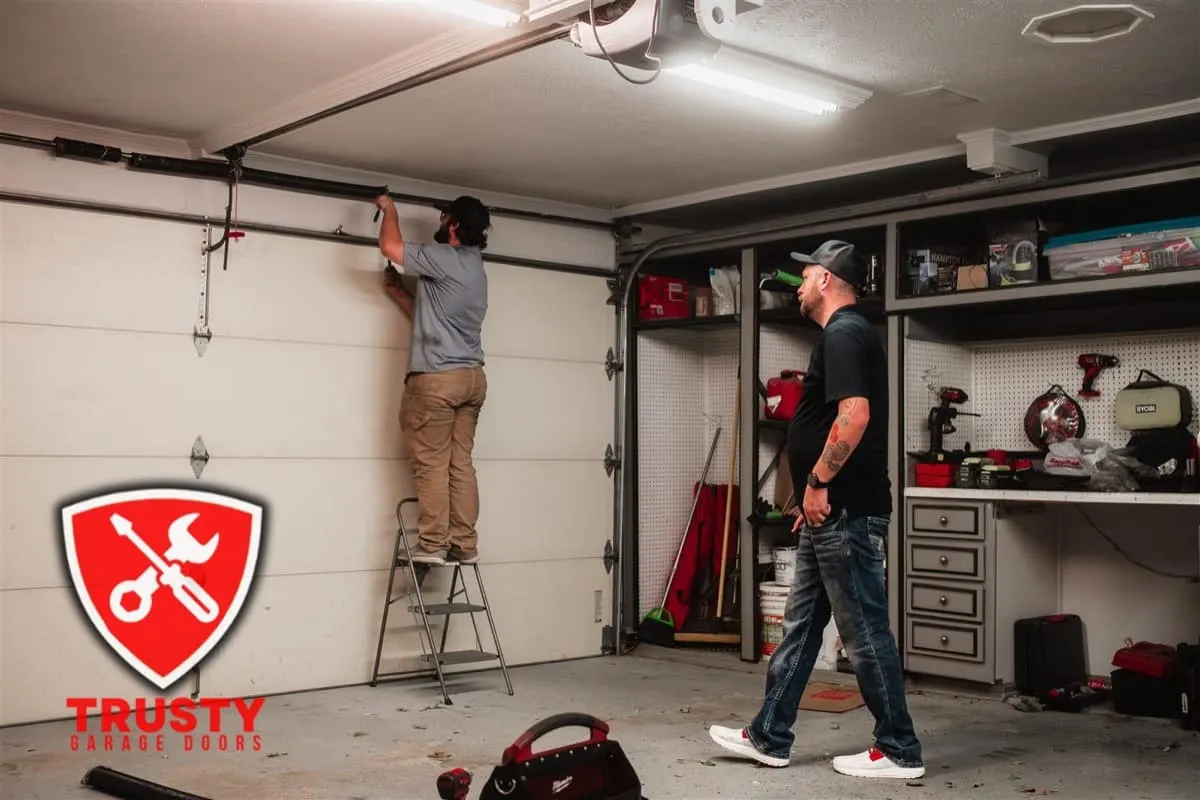
A lot of garage door calls we get in July and August aren’t emergencies — they’re things that were quietly failing since May. The heat didn’t break anything overnight; it just finished off parts that were already on the edge.
A garage attic in Plano can hit 140°F on a still August afternoon. By comparison, your car’s engine runs at about 200°F under load — but it was designed for it and gets regular oil changes. The garage door system sitting up in that attic isn’t. When something finally fails at 2pm on a Friday, it feels sudden. It wasn’t.
A little attention before the worst heat hits usually means you’re not scrambling for a repair call in August.
What Summer Heat Actually Breaks
The parts that suffer most: torsion springs, the opener motor, and anything rubber.
Springs expand in heat and contract overnight when it cools. That thermal cycling adds stress on top of the normal mechanical stress from daily use. A spring that was borderline going into summer can snap by August. We replaced a spring in Frisco last year that the homeowner thought broke “out of nowhere” — it had visible rust in the coil and was at least 12 years old. It wasn’t random.
If your door feels heavy by hand, that’s a sign worth taking seriously. Pull the emergency cord on the opener and try lifting manually — a healthy spring should make the door feel nearly weightless, and it should hold its position at waist height without drifting. If you’re doing real work to lift it, the spring has lost tension. For the full picture on how long springs last in Texas specifically, our guide on spring lifespan is worth a read.
Photo sensors are a summer quirk most people don’t expect. They sit about 4–6 inches off the floor, aimed at each other, and afternoon sun can hit them at an angle and wash out the beam. The door reads a “blocked” sensor and won’t close. If your door behaves fine in the morning but refuses to close in the afternoon, try folding a strip of electrical tape over the sensor housing to shade it from direct sun. Nine times out of ten, that’s all it takes.
Rubber bottom seals go brittle in Texas UV. A seal that looked fine in October can be crumbling by July. Close the door and look along the bottom edge from inside — if you see daylight anywhere, the seal is gone.
Your Opener Is Working Harder Than You Think
Garage door openers are rated for an operating range that tops out around 100–120°F. DFW attics routinely blow past that. Most openers handle it, but not without cost.
When a spring loses tension in the heat, the opener compensates — it’s doing more of the lifting than it was sized for. You’ll hear this as a slower upstroke, a labored hum, or the motor running longer than it used to on a normal cycle. That combination of heat stress plus extra load is what shortens opener life faster than the cycle counter alone would suggest.
Good attic ventilation helps. I’ve been in houses in McKinney and Murphy where the attic vent was completely blocked by stored boxes — the whole space was sealed off like an oven. If your garage has soffit vents or a powered attic fan, check that they’re clear before summer. It won’t drop the attic 40 degrees, but it makes a difference at the margins.
Honestly, the best thing you can do for your opener in summer is keep the door balanced and lubricated. A properly tensioned spring means the motor barely has to work.
Lubricate Before August, Not After
Timing matters. Lubricating in late spring — before temperatures run up — means the product is worked into the metal before the expansion and contraction cycles hit hard. Doing it in September after a rough summer is still worth it, but you’re playing catch-up.
Spots to hit: the torsion spring coils, the roller stems (not the nylon wheels themselves if you have them), the hinges, and the inside of the door tracks at the curves. Use silicone spray or white lithium grease. Skip WD-40 — it dries out fast, leaves a residue that attracts grit, and in a hot attic it burns off even faster.
The whole job takes ten minutes. If you do it twice a year — spring and fall — you’re ahead of most DFW homeowners and your hardware will last for it.
A 15-Minute Check Before the Heat Peaks
Do this in May or early June, before temperatures lock in for good:
- Pull the emergency cord and lift the door manually. It should feel nearly weightless and hold at waist height without drifting
- Look at the spring coil for visible rust, gaps in the wire, or any section that looks uneven compared to the rest
- Check both sensor lights — solid and steady is good; blinking means interference or misalignment
- Look along the bottom seal for cracks or daylight bleeding through
- Run a full open-close cycle and listen for grinding, scraping, or anything louder than it used to be
If the spring looks rusted or the manual lift feels like a workout, that’s a garage door repair call worth making before it becomes an August emergency.
If you want a quick estimate on any of this, our price calculator gives you a real number in under a minute. Or just call us at (214) 624-6348) — we’re in Plano, same-day service across DFW, and we’ll tell you straight what the door actually needs.
Nick founded Trusty Garage Door Repair in Plano and has spent 10+ years fixing garage doors across Dallas–Fort Worth. He still takes calls, still runs jobs, and writes these guides the way he explains things in a customer's driveway — straight, no upsell. Read Nick's story →
One tap tells Google you trust our guides, so they show up more in your own search results and AI answers.