
Why Your Garage Door Acts Up in Texas Heat & Cold
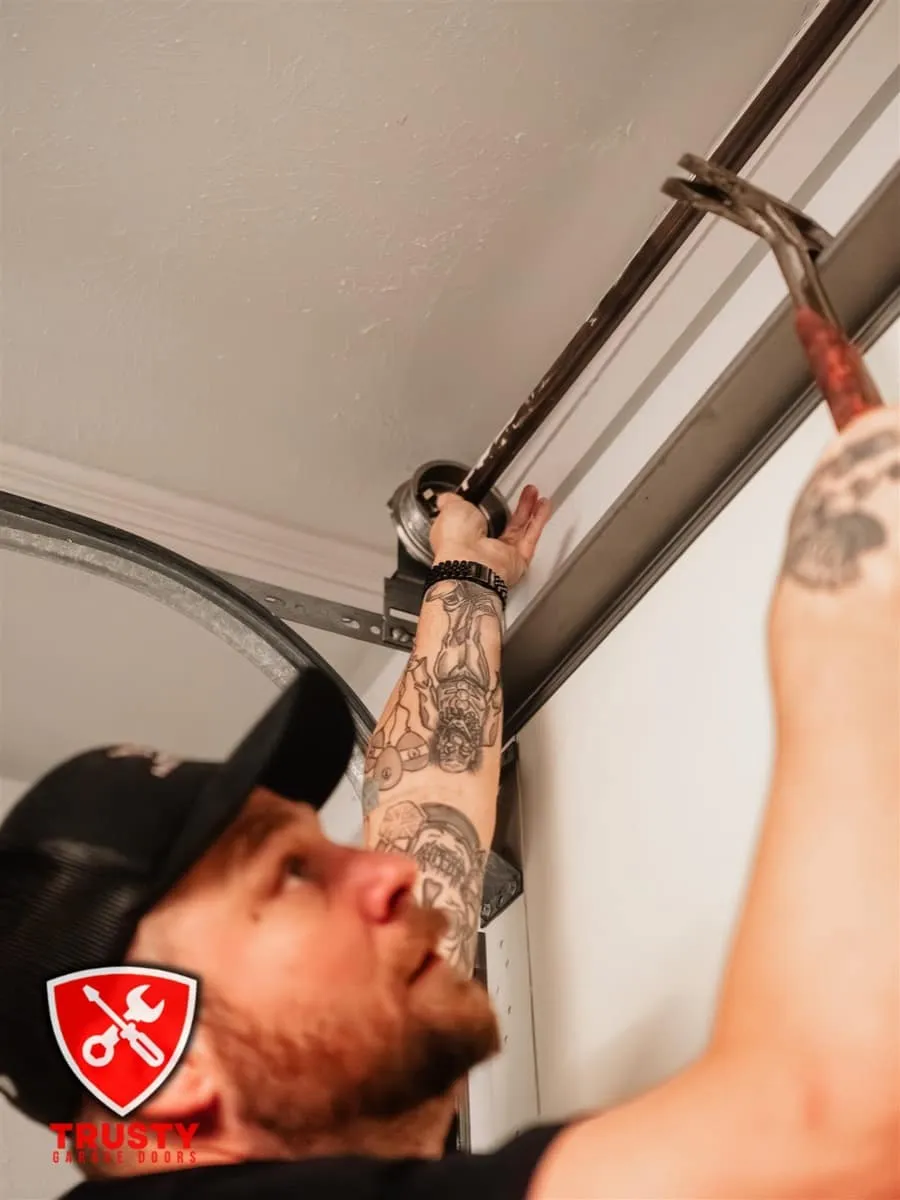
If you’ve lived in Dallas-Fort Worth for more than a year, you already know the deal: 105 degrees and humid in August, then a hard freeze blows through in January and drops us into the teens overnight. Your garage door feels every bit of that swing. It’s the largest moving object in your house, it sits on a wall that bakes in the afternoon sun, and it’s built from metal, steel springs, and rubber that all expand, contract, and stiffen as the temperature changes.
So when your door starts acting up right as the seasons turn, you’re not imagining it. Here’s what’s actually happening — and what you can sort out yourself versus what’s worth a call.
What Texas Heat Does to Your Door
Summer is rough on the parts that do the heavy lifting. A few things tend to show up once the temperature climbs:
- Springs fatigue faster. Your torsion springs are wound steel under serious tension. Heat doesn’t snap them on its own, but DFW’s long, brutal summers speed up the metal fatigue that eventually leads to a break. That’s why so many springs let go in July and August — or on the first cold morning after a hot summer, when the metal contracts and finds its weak point.
- Lubricant breaks down. Cheap grease or whatever was sprayed on years ago turns gummy and thin in the heat, then collects West Texas dust blowing in. You end up with grit grinding on the rollers and hinges instead of smooth travel.
- Metal expands. Tracks, rollers, and hinges all grow slightly when hot. If your door was already running a little tight, summer can be the tipping point where it starts binding or scraping.
- Photo-eye sensors drift. Afternoon sun pouring into the garage can wash out the safety sensors near the floor, so the door reverses for no obvious reason.
What Texas Cold Does to Your Door
Our cold snaps are short but sharp, and they expose problems heat was hiding:
- Grease thickens. The same lubricant that went runny in summer turns stiff and tacky in a freeze. The door strains, the opener works harder, and you hear more grinding and groaning.
- Steel contracts and springs break. Cold mornings are the single most common time for a spring to break. The steel shrinks, tension shifts, and any spring near the end of its life chooses that moment to go. If you hear a loud BANG from the garage like a gunshot and then the door won’t budge, that’s almost always a broken torsion spring.
- Weather seal stiffens and sticks. The rubber bottom seal can freeze right to the concrete after a rain or light ice, then tear when the opener yanks it up.
- Metal parts shrink and bind. Contraction can pull things just out of alignment enough to cause sticking or jerky movement.
“It Worked Yesterday” — Reading the Symptoms
The way your door misbehaves tells you a lot:
- Door won’t open at all, opener motor runs (or strains, then stops): Usually a broken spring. Look at the spring above the door — if there’s a visible gap or a cleanly separated coil, don’t force it. The opener isn’t built to lift a door without the springs doing most of the work, and you can burn out a motor or hurt yourself trying.
- Door opens a foot, then stops or reverses: Often a sensor or track issue, or the opener’s force settings need adjusting for the temperature change.
- Loud grinding, popping, or jerky travel: Dry or gummed-up rollers and hinges. This one’s frequently a lube-and-tune away from fixed.
- Door looks crooked or one side hangs lower: Stop using it. That’s a sign of a snapped cable or a door starting to come off its track, and running it can do real damage.
What You Can Safely Do Yourself
A little seasonal upkeep prevents a surprising number of service calls. Twice a year — ideally before peak summer and before the first freeze — do this:
- Wipe down the tracks (don’t grease the tracks themselves) and clear out dust and debris.
- Hit the rollers, hinges, and springs with a proper garage door lubricant — a silicone or lithium spray, not WD-40, which is a degreaser and makes things worse long-term.
- Wipe the photo-eye sensors with a soft cloth and make sure they’re pointed at each other.
- Check the rubber bottom seal for cracks, and on icy mornings, make sure it isn’t frozen to the slab before you hit the button.
That’s about the limit of safe DIY. Anything involving the springs or cables is a hard stop — they hold enough stored energy to cause serious injury, and they need the right tools and winding bars. There’s no shame in leaving that to a tech; even pros respect those parts.
When to Just Call
If the door won’t open, hangs crooked, drops a cable, or you see a broken spring, that’s a same-day emergency repair situation — especially if your car’s trapped inside before work. We handle plenty of these across Plano, Frisco, McKinney, and the rest of DFW, and most are straightforward once a tech is on-site. You can browse common fixes on our garage door repair page, or get a ballpark before anyone comes out using our instant price calculator.
The bottom line: Texas weather is hard on garage doors, but most “sudden” failures were building for a while. A few minutes of seasonal maintenance — and knowing when a noise means “lube it” versus “stop and call” — saves you the headache of a door stuck shut on the coldest or hottest day of the year.
Stuck door or heard that telltale bang? Call Trusty Garage Door Repair at (214) 624-6348 for honest, same-day help across Dallas-Fort Worth — or grab a no-pressure instant estimate in about a minute.
Nick founded Trusty Garage Door Repair in Plano and has spent 10+ years fixing garage doors across Dallas–Fort Worth. He still takes calls, still runs jobs, and writes these guides the way he explains things in a customer's driveway — straight, no upsell. Read Nick's story →
One tap tells Google you trust our guides, so they show up more in your own search results and AI answers.