
How to Lubricate a Garage Door the Right Way
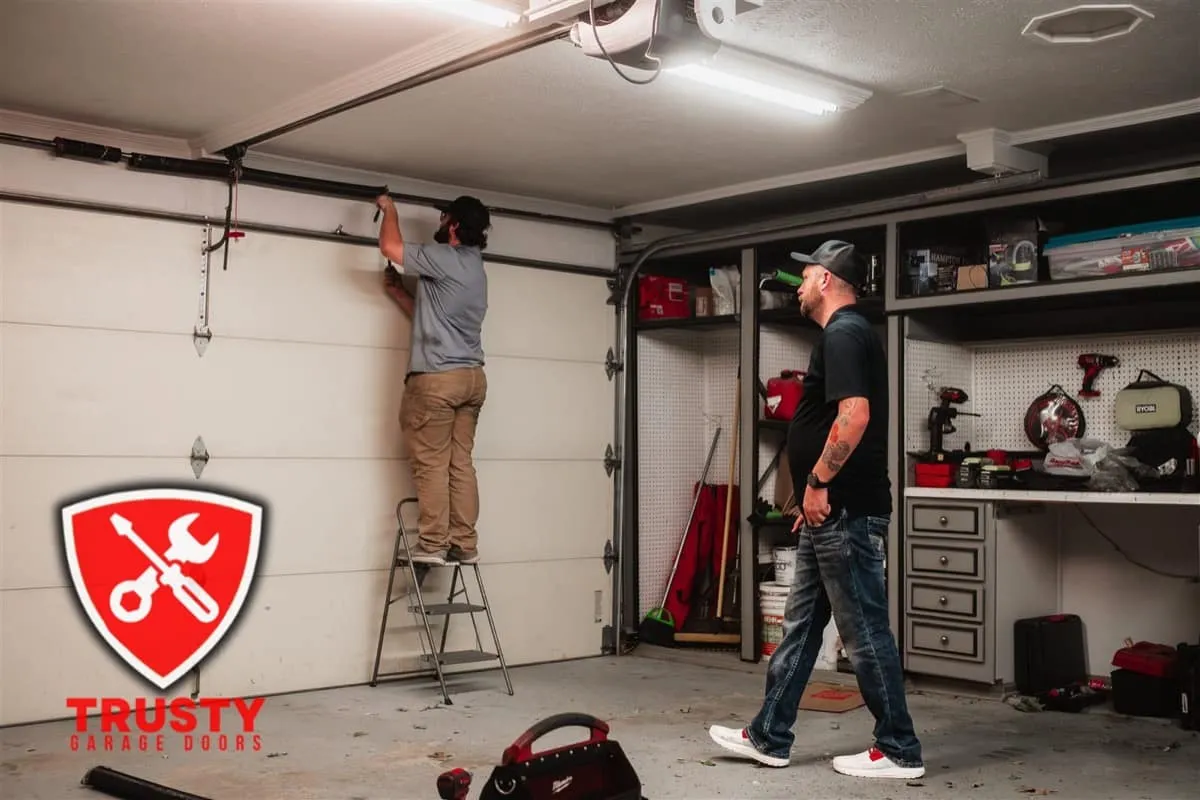
A squeaky garage door in a DFW August is basically a neighborhood alarm clock. You hit the button at 6:45 am and the whole street wakes up with you. The fix is almost always a 10-minute lube job — but most people do it wrong. They grab the WD-40 from under the sink, spray it on the hinges, and wonder why the squeal is back three weeks later.
Here’s how to actually do it right.
Put Down the WD-40
I say this on nearly every service call. WD-40 is a water-displacing cleaner and solvent, not a lubricant. It loosens rust and strips grease — which is the problem. It leaves metal temporarily slick, then evaporates and leaves parts drier than before. On garage door springs especially, it can speed up corrosion.
What you want is a silicone-based or white lithium spray labeled for garage doors. WD-40 Specialist White Lithium Grease (a totally different product from the yellow can), 3-IN-ONE Garage Door Lube, or Blaster all work well. Any hardware store, around $7–10. Buy two cans for the year.
What to Lubricate
Hinges
The hinges connect the door panels and have a pin that rotates as the door travels. Put the straw right into the gap where the pin meets the bracket — a short burst each — then cycle the door a couple times to work it in. Hit every hinge, both sides. Takes two minutes.
Rollers
The rollers are the wheels that ride in the vertical and curved tracks. On nylon rollers (the quiet black ones most newer doors have), spray the stem and bearing — not the nylon wheel. On old steel rollers, hit the bearing inside the stem. If a roller is cracked, chipped, or wobbles laterally, replace it. No amount of lube saves a shot roller.
Springs
This surprises people. Yes, lubricate the springs — the torsion coil above the door or extension springs on the sides, whichever your door uses. Run the straw along the length of the spring with the door closed. You don’t need much; a thin coat is enough. North Texas heat and our humidity swings dry springs out fast and accelerate corrosion. A lubricated spring lasts longer.
One firm warning: don’t touch the tension. If a spring is broken, uneven, or you’re not sure if it’s right, that’s a spring replacement call — not a DIY adjustment. A wound torsion spring stores enough energy to seriously injure someone. Look but don’t adjust.
Torsion Shaft Bearings
At each end of the torsion shaft, there’s a bearing plate bolted to the wall. Give those bearing centers a shot of lube too. Easy to miss, and they’re often the source of the grinding sound that starts on older doors around year eight or nine.
Opener Rail
Chain-drive openers need the chain lubricated — a light coat of white lithium grease wiped on with a rag works better than spraying it directly (less overspray mess). Belt drives don’t need lubrication. Screw-drive openers have a threaded rod that benefits from a light coat once a year, maybe twice in summer — heat bakes the grease off faster than anywhere north of the Red River. Honestly, if you’re tired of maintaining a screw-drive in a hot DFW attic, I get it. A belt drive replacement makes more sense than fighting it every season.
What NOT to Lubricate: The Tracks
The biggest mistake I see: greasing the tracks. The vertical and curved metal channels that the rollers ride in should stay clean but dry. Grease there causes rollers to slide instead of roll, which makes the door skip, stick, or jump the track. If the tracks look gunky, wipe them with a dry rag. That’s the whole job for tracks.
How Often in DFW
Twice a year is standard advice. I’d suggest three times for our climate: May before the heat peaks, September after summer stress, and November before the cold sets in. Texas heat degrades lubricant faster than most manufacturers assume, and a properly lubricated door puts less load on the opener motor when that opener is already fighting 110-degree attic temps.
When Lubrication Isn’t the Answer
If you run through all of this and the door is still grinding, binding, or running rough, you’re past the lube-can fix. Worn rollers, a bent track, a door that’s losing spring balance — those don’t go away with a spray.
Use our instant price calculator to get a ballpark before calling anyone. And if the door is running crooked or rubbing on one side, don’t force it — that turns a simple repair into off-track damage real fast.
Ten minutes, a $10 can of the right stuff, and most squeaky doors go quiet. If yours doesn’t — or you find something during the process that looks wrong — give Trusty Garage Door Repair a call at (214) 624-6348. Same-day service across the Metroplex, and we’ll tell you straight what it needs. No pressure, no upsell.
Nick founded Trusty Garage Door Repair in Plano and has spent 10+ years fixing garage doors across Dallas–Fort Worth. He still takes calls, still runs jobs, and writes these guides the way he explains things in a customer's driveway — straight, no upsell. Read Nick's story →
One tap tells Google you trust our guides, so they show up more in your own search results and AI answers.