
Garage Door Roller Replacement
Rollers are the little wheels on the edge of each garage door section that ride up and down inside the track, and they take a beating. Every time the door opens or closes, ten of them or so are spinning, bearing the load, and grinding against steel. After years of cycles they wear flat, the bearings seize, the stems bend, and that smooth glide turns into a grinding, screeching racket that echoes through the whole house. If your garage door has gotten loud enough that you wince when the kids are asleep, worn rollers are usually the reason, and it's one of the cheaper fixes there is.
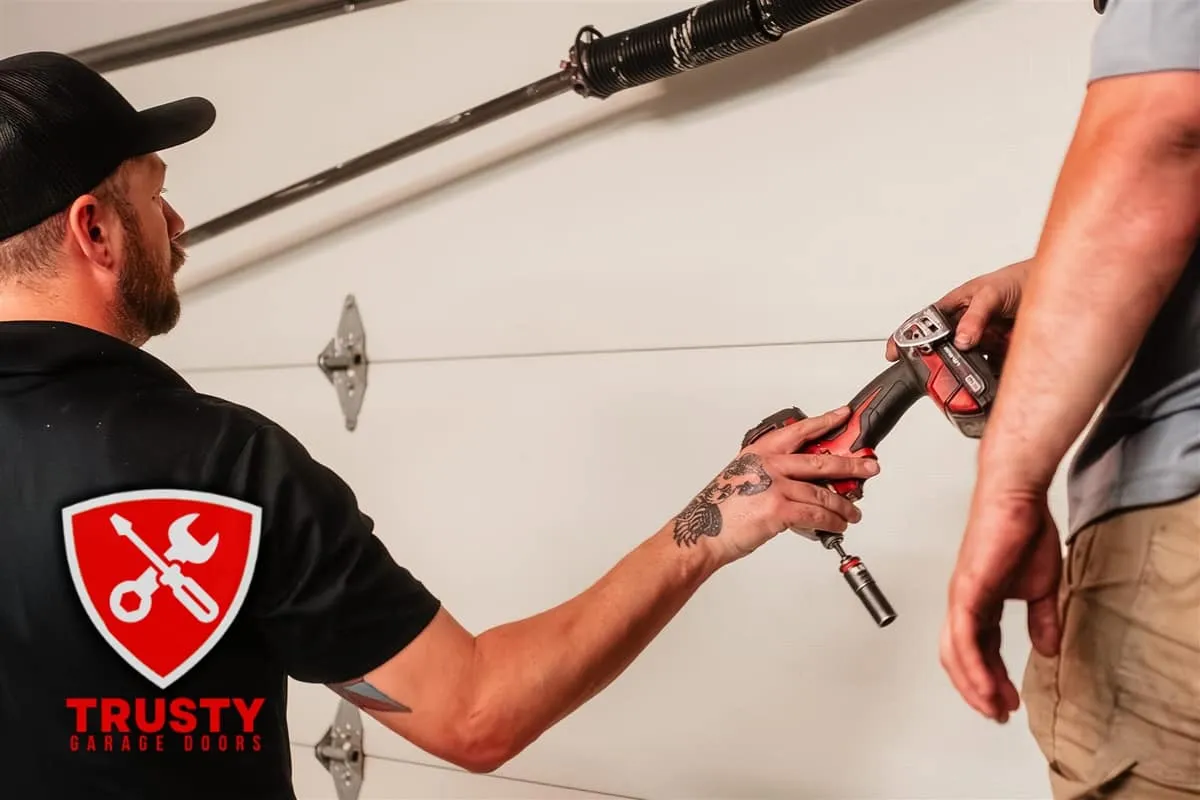
We swap rollers all over DFW, and it's a job we genuinely like doing because the before-and-after is night and day. A tired door that clatters and hitches turns quiet and smooth in about an hour. The tech we send is one of our own, an in-house, background-checked Trusty employee, not a subcontractor we found that morning, and the truck comes stocked with quiet sealed-nylon rollers so it's almost always a one-visit job. We'll check the hinges, brackets, and track while we're in there, give you an honest price before anything happens, and we're not going to talk you into parts you don't need. If half your rollers are still good, we'll tell you.
Why It Matters
Rollers seem like a small part, but they set the tone for the whole door. When they're worn, cracked, or seized, they don't ride the track cleanly anymore, so they drag, bind, and grind, and that noise is really the sound of extra wear happening. A door that isn't rolling smooth puts more strain on the opener, the springs, and the track, so bad rollers quietly age out the expensive parts around them. There's a safety angle too. A roller that's cracked or has its stem bent can pop out of the track entirely, and once a roller jumps the rail the door goes off-track, hangs crooked, and can drop or twist a panel. Cheap steel rollers, the kind a lot of builders install, are usually the culprit — they're loud, they rust, and they wear fast in our heat and grit. Stepping up to sealed-nylon rollers with real bearings is one of the best small upgrades you can make. They're dramatically quieter, they don't need constant greasing, and they last years longer. For not a lot of money you get a door that's quiet, glides clean, and stops chewing through the parts around it.
Signs You Need Garage Door Roller Replacement
- The door's gotten loud, grinding, screeching, or rattling as it runs.
- You can see rollers that are cracked, flattened on one side, or wobbling with a bent stem.
- The door hitches, jerks, or shudders instead of gliding smoothly up and down.
- There's a roller sitting loose in the track, or one that's popped out of the rail entirely.
- The rollers are the basic steel builder-grade kind and the door's a few years old.
- You see black dust or metal shavings along the track, which is roller bearings grinding themselves apart.
How We Do It
- First the tech looks over all the rollers, section by section, plus the hinges, brackets, and track, to see which rollers are actually shot and whether anything else is worn.
- You get the price up front, plain and simple, before any work starts. If only some rollers need doing, that's what we quote — no padding the job.
- With the door secured, we replace the worn rollers, almost always stepping you up to quiet sealed-nylon rollers with real bearings unless you'd rather match what's there.
- We check and snug the hinges and roller brackets while we're in there, since a loose bracket or bent hinge makes a fresh roller drag right back.
- Last, we cycle the door a few times, fine-tune it, lube the moving parts, test the opener's balance and auto-reverse, and walk you through the warranty before we head out.
What Affects the Price
- How many rollers need replacing, and whether you're doing the full set or just the worn ones.
- The grade of roller you choose. Basic steel is cheapest, quiet sealed-nylon with bearings costs a bit more and lasts a lot longer.
- Single door versus double, since a double has more rollers and more hardware to check.
- Whether we find bent hinges, loose brackets, or track damage riding along with the worn rollers.
- A standard same-day visit versus an after-hours call. For your actual number, run our online price calculator or call us at (214) 624-6348.
Helpful Guides
- Garage Door Making Noise? What Each Sound MeansA DFW garage door pro breaks down what grinding, squealing, banging, and rattling sounds mean, what's normal, and when to call for repair.
- Garage Door Stuck Halfway? What It MeansYour garage door stopping mid-travel almost always means one of four things. A Plano tech breaks down each cause and what you can safely do about it.
- The Seasonal Garage Door Maintenance ChecklistA DFW garage door pro's season-by-season maintenance checklist to keep your door quiet, safe, and storm-ready through Texas heat and cold.
Our Other Services
- Garage Door Repair
- Garage Door Spring Replacement
- Opener Repair & Installation
- Off-Track Door Repair
- New Garage Door Installation
- Maintenance & Tune-Up
- Emergency & Same-Day Service
- Garage Door Cable Repair
- Garage Door Track Repair
- Garage Door Panel Replacement
- Commercial Rolling Steel Door Repair
- Commercial Sectional Door Repair
- Commercial Door Operator Repair
- Loading Dock Equipment Repair
- High-Speed Door Repair
- Fire-Rated Door Repair & Drop Testing
I had a great experience with Taylor T. from Trusty Garage Door Repair. He was professional, punctual, and clearly very knowledgeable. He thoroughly explained the issue and walked me through the repair step by step, which gave me a lot of confidence. He even offered practical guidance on maintaining my door to prevent future problems. Absolutely recommend.
Frequently Asked Questions
Do I have to replace all the rollers, or just the bad ones?+
You don't have to do all of them, but on an older door there's a case for it. The rollers are all the same age with the same cycles, so if a few are shot the rest usually aren't far behind, and doing the set at once saves a second trip charge later. That said, if half of yours are still in good shape, we'll tell you straight and just do the ones that need it. No padding the job.
Are the quiet nylon rollers actually worth the upgrade?+
For most folks out here, yeah. Sealed-nylon rollers with real bearings are dramatically quieter than the builder-grade steel ones, they don't rust, they glide cleaner, and they last years longer without needing constant greasing. If your door backs up to a bedroom or you're just tired of the racket, it's one of the best small upgrades you can make, and the price difference is modest.
Will new rollers fix my noisy door?+
Most of the time worn rollers are the biggest single reason a door's loud, so replacing them usually makes a huge difference. That said, some of the racket can be dry hinges, loose hardware, or a track that's drifted out of line, and we check all of that at the same time. If the noise is coming from something else, like tired springs or an opener on its way out, we'll show you what it is and quote it before we touch it.
Can a bad roller throw the door off track?+
It can, yeah. A roller that's cracked or has a bent stem can pop right out of the rail, and once one roller jumps the track the door starts running crooked and can go fully off-track, which is a bigger repair. That's exactly why it's worth catching worn rollers early. A cheap roller swap now beats a bent-track, snapped-cable job later.
How long does a roller replacement take?+
Most standard residential roller jobs run about an hour once the tech's on site. Since the trucks are stocked with quiet sealed-nylon rollers, the large majority of folks around DFW are back to a smooth, quiet door that same day.
Is it your own techs, and is the work guaranteed?+
Our own people, every job. In-house, background-checked Trusty techs, never subcontractors, and the parts and labor are warranty-backed. That's how we've built our name across Plano and the rest of the metroplex since 2020, and if something's not right after we leave, we come back and make it right.