
Torsion vs. Extension Springs: What's on Your Door?
Your garage door weighs somewhere between 150 and 350 pounds. The only reason you can lift it with one hand (or your opener can lift it without burning out) is the spring system doing the heavy work. There are two kinds out there: torsion and extension. Knowing which one is hanging in your garage tells you a lot about your door’s safety, what a repair will run, and how worried you should be when it finally lets go.
After years of fixing doors all over Plano, Frisco, McKinney, and the rest of DFW, I can tell you most folks have no idea which system they’ve got until something snaps. Let’s fix that.
The Quick Way to Tell What You Have
Open your garage, flip the light on, and look up.
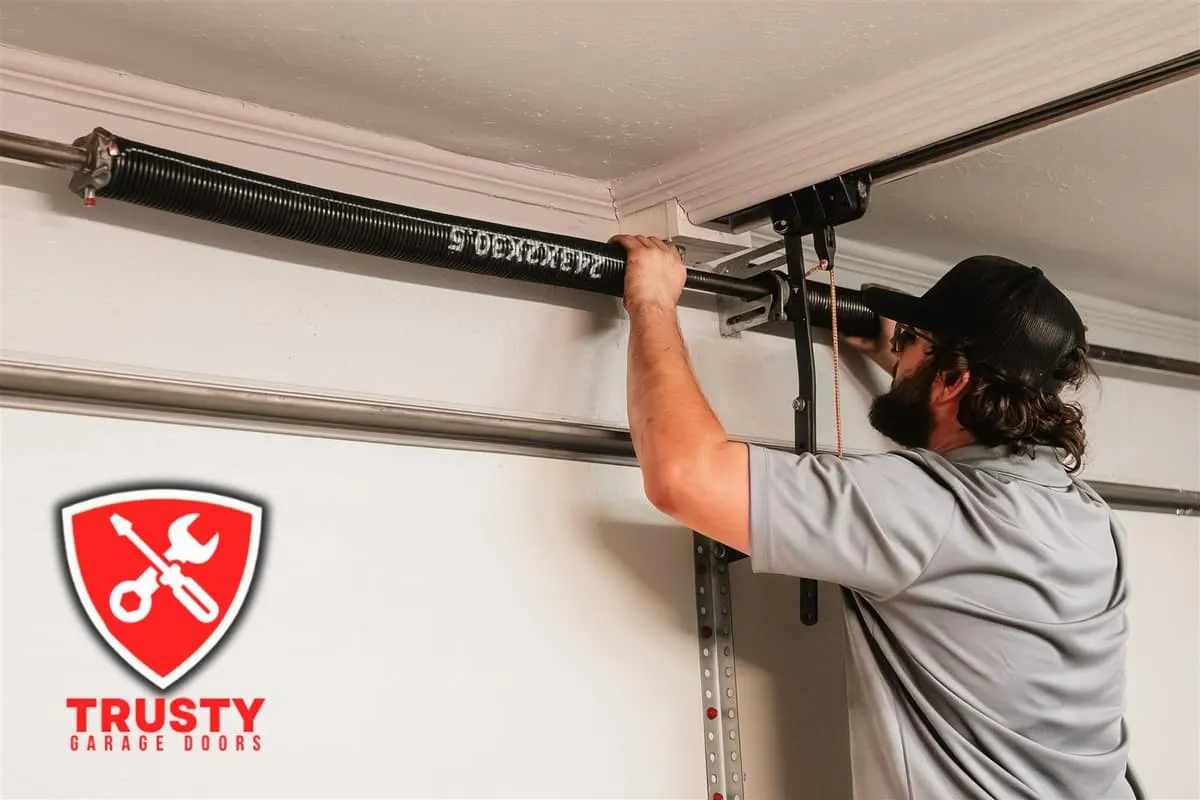
- Torsion springs sit on a metal shaft (the torsion bar) mounted horizontally on the wall just above the door opening. Usually one long spring in the center, sometimes two on bigger or double doors. They look tightly wound and beefy.
- Extension springs run along the horizontal tracks on both sides of the door, parallel to the ceiling. They stretch and contract as the door moves, and they’re typically thinner and longer.
If the springs are above the door, you’ve got torsion. If they’re off to the sides above the tracks, you’ve got extension. That’s the whole test.
How Each System Actually Works
Torsion springs work by twisting. As the door comes down, the spring winds up tight and stores energy; when you open the door, it unwinds and releases that energy to do the lifting. Because they’re mounted to a solid shaft and use cable drums, the lift is controlled, balanced, and smooth.
Extension springs work by stretching. They pull the door up as they contract. They get the job done, but the force is more “yank” than “lift,” which is why older extension setups can feel jerkier and bang around more.
Why Torsion Is the Better System (Usually)
I’ll be straight with you: on most modern doors, torsion is the system I’d want on my own house. Here’s why.
- Safety. When an extension spring breaks under tension, that piece of steel can become a projectile across your garage. Torsion springs are mounted to a shaft, so when they fail, the energy stays contained on the bar instead of flying somewhere.
- Balance and lifespan. Torsion systems distribute weight more evenly, so the door tracks straight, the opener works less, and everything lasts longer. A typical torsion spring is rated for around 10,000 cycles (open-and-close), with higher-cycle springs available.
- Smoother, quieter operation. Less wear on your rollers, hinges, and opener.
That said, extension springs aren’t junk. On lighter single doors or in tighter headroom situations, they’re a perfectly valid, lower-cost option. If your home already has a safe extension setup with safety cables running through the springs, you’re in decent shape. No safety cables? That’s something we’d want to address.
What This Means in the Texas Heat
DFW is rough on springs, and I’m not being dramatic. Our temperature swings are brutal: a garage can bake at 110-plus in a July afternoon, then a blue norther drops us 40 degrees overnight. Metal expands and contracts with every swing, and over thousands of cycles that fatigue adds up. Add our hard water and humidity to the mix and you get corrosion that eats into the steel.
This is exactly why I tell DFW homeowners not to ignore the warning signs:
- The door feels heavier than it used to, or the opener struggles
- A loud bang from the garage (that’s often a spring letting go)
- A visible gap in the spring coil
- The door opens crooked, or won’t stay open halfway
- Cables hanging loose or off the drums
If your door is stuck closed and you can see a separated spring, don’t fight it. Cars get trapped in garages over snapped springs more than you’d think. We cover what to do in our guide to garage door spring replacement.
Can You Replace a Spring Yourself?
I’m all for homeowners handling roller lube, tightening hinges, and weatherstripping. Springs are where I draw the line, and I say that as someone who repairs them for a living.
A torsion spring holds hundreds of pounds of stored energy even when your door is just sitting closed. Winding and unwinding it requires the right bars, the right technique, and a real respect for what happens if your grip slips. This is the most common DIY garage door injury we see, and emergency room bills cost a lot more than a service call.
A trained tech also matches the spring’s wire size, length, and inside diameter to your exact door weight. Guess wrong and you’ll wear out the opener, throw the door off balance, or burn through the new spring in a fraction of its rated life. If your door has already jumped its tracks from a spring failure, that’s a separate fix covered under off-track repair.
What a Spring Job Costs
Price depends on whether you have one spring or two, torsion versus extension, the cycle rating, and your door’s size and weight. Rather than throw out a number that may not fit your door, check our standard repair prices or get a real ballpark with our garage door price calculator. It takes about a minute and there’s no obligation.
One honest tip from the trade: if you have two torsion springs and one breaks, replace both. They’ve aged at the same rate, and the second one is usually right behind the first. Doing them together saves you a second service call.
Still Not Sure What You’ve Got?
Send us a photo or just describe what you see and we’ll tell you straight: torsion or extension, how worn it looks, and whether it’s something to watch or fix now. No pressure, no bait-and-switch, just a real answer from a local tech.
Call or text (214) 624-6348, or get an instant ballpark with our price calculator. Same-day and 24/7 emergency service across the Dallas-Fort Worth metroplex.
Nick founded Trusty Garage Door Repair in Plano and has spent 10+ years fixing garage doors across Dallas–Fort Worth. He still takes calls, still runs jobs, and writes these guides the way he explains things in a customer's driveway — straight, no upsell. Read Nick's story →
One tap tells Google you trust our guides, so they show up more in your own search results and AI answers.